
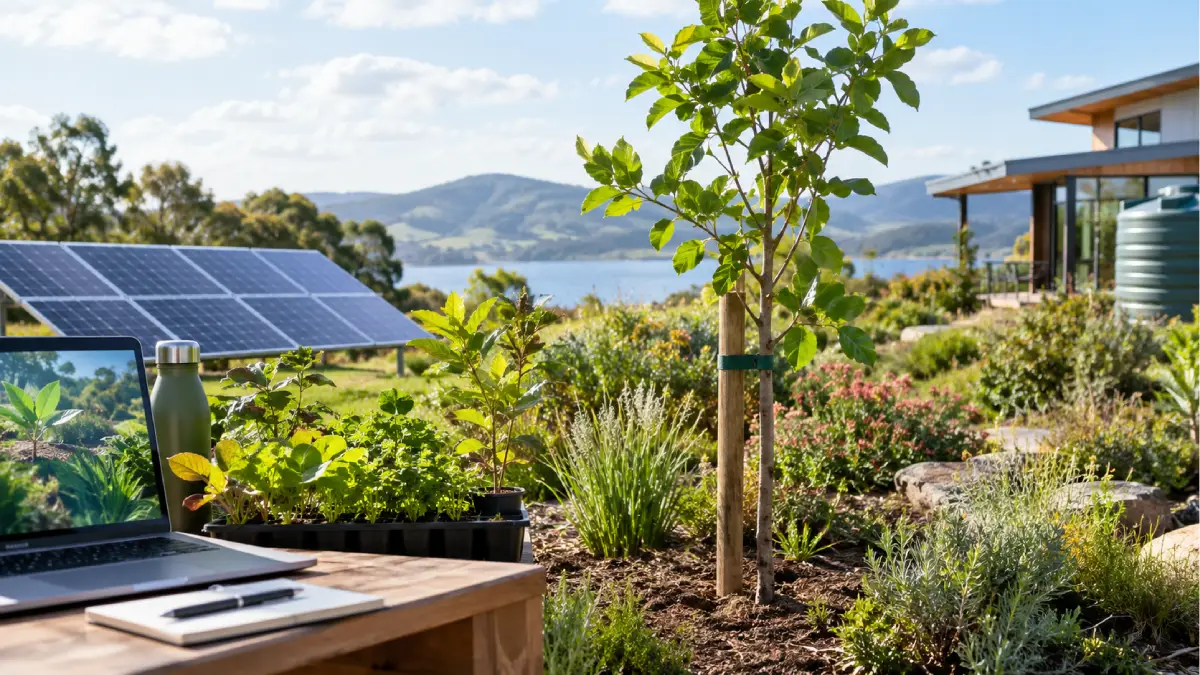
If you have searched for Saving The Plants.com or visited www. Savingtheplants.com using a search engine you may be asking yourself what actually is the website, what does it have to offer and is it all just about plant care or does it also have other environmental content. The current version of the website is mainly an environmentally conscious, green technology and sustainable living focused website.
The website homepage features sections such as Green Tech, General Thoughts and Sustainability among others, alongside posts relating to plant growing, conservation, technology and environmental issues generally.
Therefore it is worth taking a look at what the website looks like as it is now rather than just relying on older copy or other websites which have written about it.
Table of Contents
What Is SavingThePlants.com?
SavingThePlants.com is an online content website focused on plants, sustainability, environmental subjects and green technology.
Its homepage currently describes the site around sustainable living, green technology and environmental insights. The visible navigation includes Sustainability, Green Tech and General Thoughts, while the homepage displays a mixture of environmental and technology-related articles.
The site therefore should not necessarily be viewed as a specialist botanical database or scientific research portal.
Instead, it is better understood as a general-interest environmental publication that covers a variety of topics connected with plants, sustainability and technology.
The distinction is important because a reader looking for introductory information about conservation may find useful material, while someone needing authoritative scientific information should also consult specialist organisations and original research.
What Does SavingThePlants.com Cover?
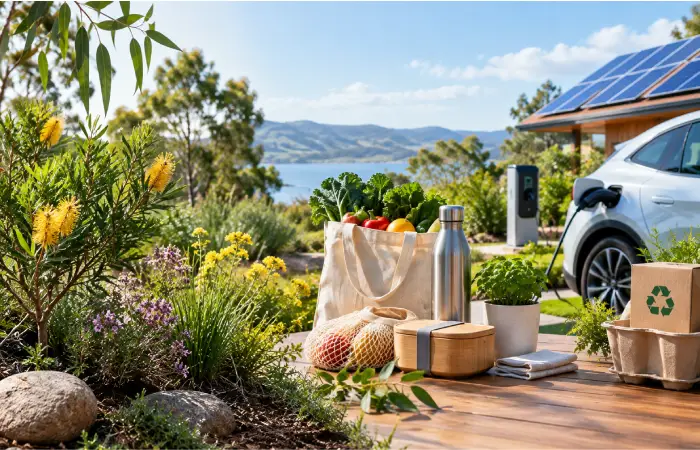
The site’s content changes over time, but its current structure provides several broad subject areas.
Sustainability
Sustainability is one of the website’s visible categories.
Articles in this area discuss subjects connected with environmental responsibility, plant protection, climate action, local ecosystems and sustainable living.
For example, current content discusses protecting native plants and restoring habitats, while other material addresses everyday approaches to environmental sustainability.
This makes the Sustainability section potentially useful for readers looking for introductory explanations rather than highly specialised scientific literature.
Green Technology
SavingThePlants.com also publishes content under a Green Tech category.
Its homepage currently features articles concerning subjects such as bioplastic technology, electric utility vehicles, e-bikes and EV charging.
This creates a connection between environmental issues and technology.
For readers interested in sustainability, this can be useful because environmental solutions increasingly involve technology, infrastructure, energy systems and data.
However, technology-related claims should still be checked against manufacturers, government agencies, universities or recognised research organisations when the information could affect a significant decision.
Plant and Environmental Topics
Plant-related material is another important part of the website.
The site’s Plants category includes content concerning indoor plants, native plant gardens, biophilic design, landscaping and plant conservation.
The website has also published dedicated articles about protecting local flora, biodiversity and habitat restoration.
As a result, someone searching for SavingThePlants.com may encounter both practical gardening information and broader environmental topics.
What Does the SavingThePlants.com About Page Say?
The About page gives additional context about the site’s intended identity.
It describes SavingThePlants.com as an environmental website created around a passion for plants and conservation. The page says the site’s content ranges from plant and ecosystem subjects to practical plant-care information, using a deliberately light-hearted editorial style.
This is useful context because the website is not presenting itself solely as an academic or scientific publication.
Readers should therefore understand the difference between:
- An educational website
- A specialist scientific resource
- A government information source
- Peer-reviewed research
- Professional conservation guidance
These categories can overlap, but they are not interchangeable.
How Is the Website Organised?
The current website uses a relatively straightforward editorial structure.
Its navigation includes:
| Section | General purpose |
| Sustainability | Environmental and sustainable-living subjects |
| Green Tech | Technology connected with environmental themes |
| General Thoughts | Broader commentary and informational topics |
| About | Information about the site’s identity and mission |
| Contact | Ways to contact the website |
| Privacy Policy | Information about website data practices |
| T & C | Terms and conditions |
The homepage also displays recent and featured articles across these areas.
This structure means users can generally approach the site in two ways: search for a specific article or browse by subject category.
Is SavingThePlants.com a Plant-Care Website?
Not exclusively.
The name naturally suggests a website dedicated to protecting plants, and plant conservation is certainly represented in its content.
However, the current website covers a broader collection of subjects, including sustainability and green technology.
Someone searching specifically for plant-care advice may therefore find relevant material, but should not assume that every article on the domain is about horticulture.
Similarly, a reader looking for scientific conservation data should distinguish between general educational articles and primary conservation resources.
How to Use SavingThePlants.com Effectively
If you are new to the website, a simple approach can make your research more useful.
1. Start with the homepage
Begin at the official website rather than relying on a third-party summary.
The homepage provides access to the site’s main categories and current articles.
2. Choose the most relevant category
If you are interested in environmental responsibility, start with Sustainability.
For technology-related environmental subjects, Green Tech may be more appropriate.
If you are looking for broader commentary, General Thoughts may contain relevant material.
3. Read the complete article
Avoid judging a topic only from the title or search-result snippet.
Read the article itself and look for:
- Author information
- Publication date
- Sources
- Specific evidence
- Links to original research
- Clear distinctions between fact and opinion
4. Verify important claims
This is especially important for claims involving environmental science, climate, endangered species, health, finance or technology.
For specialist plant-conservation information, resources from organisations such as BGCI and IUCN can provide a stronger evidence base.
5. Check whether the information is current
Environmental and technology information can change.
A recently updated conservation strategy, new research finding or revised policy may make older information incomplete.
How Reliable Is the Information on SavingThePlants.com?
There is no sensible reason to label an entire website as either completely trustworthy or completely untrustworthy without examining the individual information being used.
SavingThePlants.com does have several transparency-related pages, including an About page, Contact page, Privacy Policy and Terms & Conditions.
However, its own Terms & Conditions state that the website does not ensure that information is correct or complete and does not promise that material will always remain up to date.
That means readers should take a sensible middle position.
The website can be useful for discovering topics, learning basic concepts and finding ideas for further research.
For important claims, however, verify the information independently.
This is particularly important when an article makes claims about endangered species, conservation status, climate impacts, environmental policy or scientific findings.
SavingThePlants.com and Professional Conservation Sources
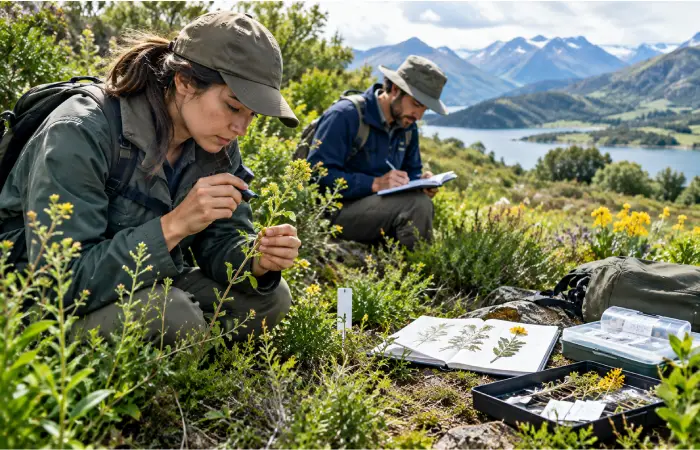
Plant conservation is a recognised international field with established organisations and frameworks.
For example, Botanic Gardens Conservation International (BGCI) operates a global network focused on plant conservation and works on conservation prioritisation, seed conservation, ecological restoration, tree conservation and plant health.
BGCI also explains that its current Global Strategy for Plant Conservation is aligned with the Kunming-Montreal Global Biodiversity Framework, with the 2020–2030 strategy formally adopted through the Convention on Biological Diversity’s COP16 process.
IUCN also works on biodiversity conservation and supports implementation of international biodiversity frameworks through scientific and policy expertise.
These organisations are useful reference points when you need more authoritative information than a general-interest article can provide.
In practice, SavingThePlants.com can be a starting point for learning, while specialist organisations can be used to verify more consequential claims.
Privacy, Terms and Contact Information
One positive aspect of researching a website is checking whether it provides basic policy and contact information.
SavingThePlants.com has a Contact page that currently lists a contact form and an email address.
Its Privacy Policy explains that the site may collect information associated with comments, including an IP address and browser user-agent information for spam detection. It also discusses cookies, embedded third-party content and data-retention practices.
The Terms & Conditions address areas including cookies, intellectual property, comments, linking and disclaimers.
Readers should remember that having these pages does not automatically establish that every claim on a website is accurate. They are simply useful transparency signals that help visitors understand how the site says it operates.
What Should You Check Before Acting on Environmental Advice?
If an article recommends a particular environmental action, use a simple verification checklist.
Check the source
Look for links to universities, government agencies, recognised conservation organisations or original studies.
Check the date
Environmental research and policies can change.
Check the claim
Ask whether the article provides evidence or simply states a conclusion.
Check the context
A recommendation suitable for one climate, plant species or ecosystem may not apply elsewhere.
Check the original source
If an article refers to a study, report or statistic, try to locate the original publication.
Avoid confusing general advice with professional guidance
General educational content can help you understand an issue, but it should not automatically replace specialist advice.
Who May Find SavingThePlants.com Useful?
The website may be useful for several types of readers.
Beginners
People who are new to sustainability or plant conservation can use general-interest articles to learn terminology and discover topics for further research.
Gardeners
Readers interested in native plants, indoor greenery, sustainable gardening and related subjects may find relevant articles in the Plants section.
Sustainability readers
People interested in environmental responsibility can explore the Sustainability category.
Technology readers
Those interested in the intersection between technology and environmental issues can explore Green Tech content.
Researchers
Researchers may use the site to discover topics, but should verify important information through primary and specialist sources.
Pros and Limitations of SavingThePlants.com
| Potential benefit | Limitation |
| Covers plants and environmental subjects | Not every article is a specialist scientific source |
| Includes sustainability content | Content quality may vary by topic |
| Includes green technology articles | Technology information can become outdated |
| Has About and Contact pages | Website policies do not guarantee factual accuracy |
| Provides Privacy and Terms pages | Readers should still independently verify important claims |
| Beginner-friendly subject coverage | Advanced researchers may need primary literature |
The main takeaway is that usefulness and authority are not exactly the same thing.
A website can be useful for learning about a subject without being the final source you rely on for a scientific or professional decision.
SavingThePlants.com vs a Specialist Conservation Source
| Factor | SavingThePlants.com | Specialist organisation |
| Main purpose | General environmental and sustainability content | Conservation research, policy or specialist work |
| Beginner accessibility | Generally suitable for general readers | Varies |
| Plant topics | Yes | Usually specialist-focused |
| Green technology | Yes | Depends on organisation |
| Scientific authority | Varies by article | Generally stronger for specialist claims |
| Primary research | Not necessarily | Often provides or links to primary material |
| Best use | Topic discovery and general education | Verification and specialist research |
This does not mean one should automatically replace the other.
A sensible research process can use a general-interest website to understand a subject before moving to specialist resources for deeper verification.
Is SavingThePlants.com Safe to Visit?
Website safety and information reliability are two separate questions.
A website can be accessible while still containing information that should be independently checked.
Likewise, the existence of a Privacy Policy or Terms page does not prove that every external link or article is risk-free.
When visiting an unfamiliar website, sensible precautions include:
- Keep your browser and security software updated.
- Avoid downloading unknown files.
- Do not provide unnecessary personal information.
- Check privacy policies before submitting data.
- Be cautious about external links.
- Do not make payments unless you understand what you are purchasing.
- Verify important claims using independent sources.
For ordinary reading, these are sensible precautions to apply to SavingThePlants.com just as they are to other unfamiliar websites.
What Makes Plant Conservation Information Trustworthy?
When researching plant conservation, several characteristics are particularly useful.
Clear sourcing
A strong article should identify where important facts came from.
Current information
Conservation classifications and policies can change, so publication and update dates matter.
Specialist expertise
Information produced or reviewed by conservation scientists, universities, botanical institutions or recognised organisations can provide additional confidence.
Primary evidence
Original studies, official datasets and institutional reports are generally preferable to unsupported summaries.
Appropriate uncertainty
Good environmental writing should acknowledge uncertainty where evidence is incomplete rather than presenting every claim as absolute.
These principles are useful whether you are reading SavingThePlants.com or another environmental website.
Comparison Tables / Useful Lists
SavingThePlants.com at a Glance
| Factor | Current assessment |
| Website | SavingThePlants.com |
| Primary theme | Sustainability, plants and environmental subjects |
| Other major theme | Green technology |
| Content type | Online articles and guides |
| Plant content | Yes |
| Sustainability content | Yes |
| Green technology content | Yes |
| About page | Available |
| Contact page | Available |
| Privacy Policy | Available |
| Terms & Conditions | Available |
| Best for | General environmental information and topic discovery |
| Verification needed? | Yes, for important scientific or consequential claims |
Quick Research Checklist
Before relying on information from the website:
- Check the publication date.
- Identify the author.
- Look for sources.
- Check whether statistics have an original source.
- Compare important claims with specialist organisations.
- Avoid treating opinion as scientific consensus.
- Check whether advice applies to your specific location or situation.
FAQ’s
What is SavingThePlants.com?
SavingThePlants.com is an online environmental and sustainability website covering plant-related topics, sustainable living, green technology and other general-interest subjects. Its current homepage organises content into categories including Sustainability, Green Tech and General Thoughts.
What does SavingThePlants.com cover?
The website covers a mixture of plant conservation, sustainability, gardening, environmental issues and green technology. Its current content includes topics ranging from native plants and habitat restoration to bioplastics and electric mobility.
Is SavingThePlants.com a plant-care website?
Not exclusively. Although plant and conservation topics are an important part of the site, its current content also covers sustainability, green technology and broader environmental subjects.
Is SavingThePlants.com a scientific research website?
It is better treated as a general-interest informational website rather than automatically assuming that it is a scientific research publication. Important scientific claims should be checked against primary research or recognised conservation organisations.
Does SavingThePlants.com have an About page?
Yes. The website has an About page describing its mission and editorial identity around plants, environmental subjects and conservation.
Does SavingThePlants.com have a Privacy Policy?
Yes. The site’s Privacy Policy discusses comments, cookies, embedded third-party content, data retention and related privacy matters.
Is SavingThePlants.com safe?
There is not enough reason to give a blanket safety or trust verdict based solely on the existence of the website. Users should apply normal online-safety practices and independently verify important information before acting on it.
Where can I find authoritative plant-conservation information?
Useful starting points include Botanic Gardens Conservation International and IUCN. BGCI specifically works on plant conservation, including conservation prioritisation, seed conservation, ecological restoration and tree conservation.
Final Thoughts
SavingThePlants.com is a general environmental and sustainability website that currently covers plant-related subjects alongside sustainability, green technology and wider informational content. Its homepage, About page and category structure provide a useful picture of what the site is trying to offer.
The site can be useful for discovering environmental topics and learning basic concepts, particularly for general readers.
However, readers should avoid treating every article as a definitive scientific source. The site’s own Terms & Conditions acknowledge that it does not guarantee the correctness, completeness or continuing currency of its information.
For important conservation, scientific or environmental decisions, use SavingThePlants.com as a starting point and verify significant claims through recognised organisations such as BGCI, IUCN, government agencies, universities and original research.
That approach gives you the convenience of accessible online content without sacrificing the reliability that matters when the information has real-world consequences.
