
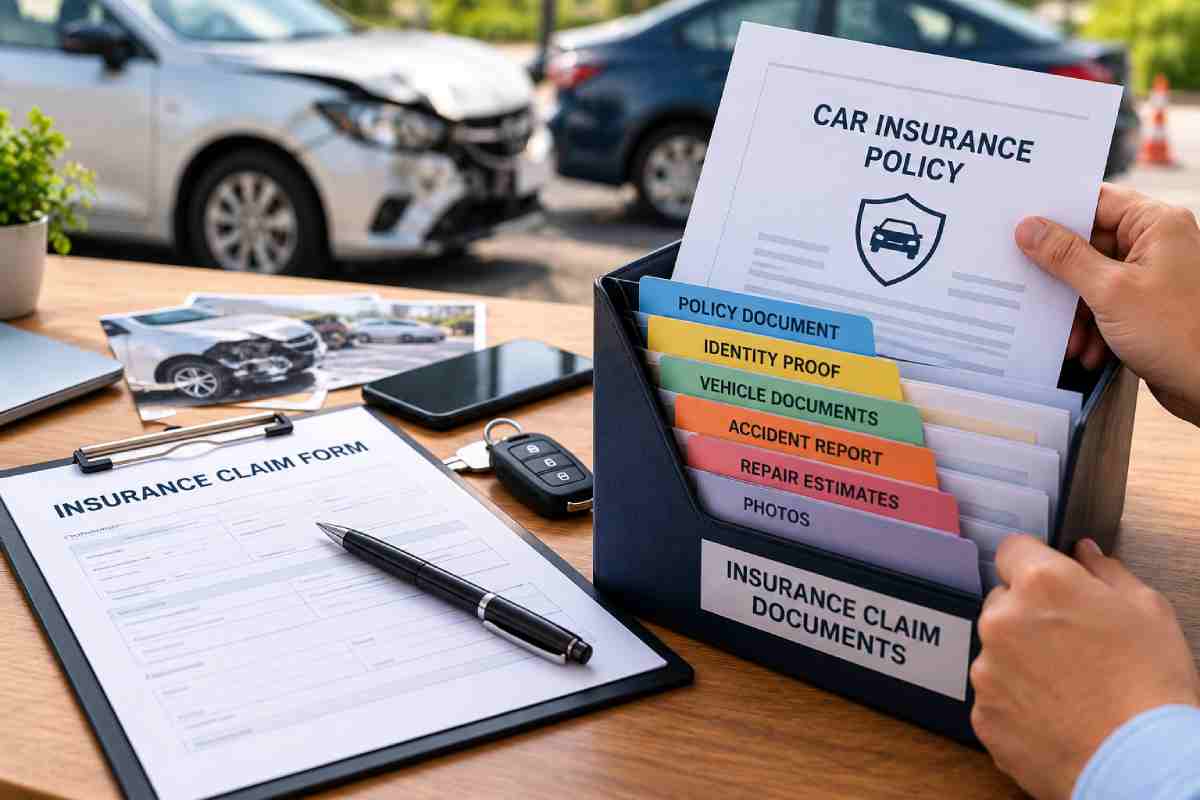
A vehicle accident, theft, or unexpected damage can be stressful for any car owner. While having a valid insurance policy provides financial support during such situations, the claim process becomes smoother when all required documents are available and correctly maintained.
Many claim delays happen because policyholders are unable to provide the necessary information or documents at the right time. Preparing your documents in advance can help you complete the claim process more efficiently and avoid unnecessary follow-ups.
Whether you are making a claim for accidental damage, theft, or repairs, keeping your records organised is an important part of managing your car insurance effectively.
Table of Contents
Why Documents Are Important During a Motor Insurance Claim
Insurance claims require verification of several details, including vehicle ownership, policy validity, accident circumstances, and repair requirements.
Documents help the insurer assess:
- Whether the policy was active at the time of the incident
- Details of the insured vehicle
- Ownership and registration information
- Nature and extent of the damage
- Claim eligibility based on policy terms
Providing complete and accurate documents allows the insurer to evaluate the claim properly and proceed with the required steps.
Essential Documents Required for a Car Insurance Claim
The exact documents required may vary depending on the type of claim and insurer requirements. However, keeping the following documents ready can make the process easier.
1. Insurance Policy Details
Your policy document contains important information such as:
- Policy number
- Vehicle details
- Coverage details
- Policy validity period
Keep a digital copy of your policy document on your phone or email so that it can be accessed easily when required.
2. Registration Certificate (RC)
The vehicle registration certificate confirms ownership and details of the insured vehicle.
Ensure that the information mentioned in your RC matches the details provided in your insurance policy. Any mismatch can create additional verification requirements during the claim process.
3. Driving Licence
A valid driving licence of the person driving the vehicle at the time of the incident is generally required during claim processing.
Always ensure that your driving licence is valid and appropriate for the type of vehicle you are operating.
4. Claim Form
The claim form provides details about the incident, vehicle damage, and circumstances leading to the claim.
Fill in the information carefully and ensure that all details are accurate. Incorrect or incomplete information may result in delays during claim evaluation.
5. FIR or Police Report (Where Applicable)
For certain situations such as theft, major accidents, or third-party damage cases, a police report or FIR may be required.
If an FIR is needed, report the incident to the relevant authorities and keep a copy of the document for the claim process.
6. Repair Estimates and Bills
For vehicle damage claims, repair estimates from the garage may be required before repairs begin.
After repairs are completed, retain all invoices, bills, and payment-related documents as they may be required for claim settlement.
Documents That Can Help With a Smoother Cashless Claim
Many insurers provide network garage facilities where policyholders can get repairs completed without paying the entire repair amount upfront, subject to policy terms and approval.
With cashless car insurance, the insurer generally settles the eligible repair amount directly with the network garage, while the policyholder pays applicable deductibles or non-covered expenses.
To make the cashless process smoother, keep these details ready:
- Policy information
- Vehicle documents
- Claim registration details
- Accident photographs
- Garage-related information
- Required forms submitted to the insurer
Checking whether the selected garage is part of the insurer’s network can also help avoid confusion during repairs.
Take Photos and Record Incident Details
Apart from official documents, collecting supporting information immediately after an incident can be helpful.
If it is safe to do so, take photographs of:
- Vehicle damage
- Accident location
- Surrounding conditions
- Other vehicles involved, if applicable
Also note important details such as the date, time, location, and brief description of the incident.
These details can support the claim assessment process.
Common Documentation Mistakes to Avoid
Not Updating Vehicle Details
Changes such as ownership transfer or updated contact information should be reflected in relevant records.
Submitting Incomplete Information
Missing details in claim forms or documents can lead to additional verification requests.
Losing Policy Records
Maintain digital and physical copies of important documents to access them quickly when needed.
Starting Repairs Without Following the Claim Process
For many claims, vehicle inspection or approval may be required before repairs begin. Follow the insurer’s instructions to avoid complications.
Tips to Keep Your Documents Ready
A few simple habits can help you stay prepared:
- Save digital copies of your policy and vehicle documents
- Keep important documents updated
- Store repair bills and previous claim records
- Note your insurer’s claim contact details
- Review your policy coverage periodically
Conclusion
Preparing documents before filing a motor insurance claim can significantly reduce delays and make the process more convenient. Keeping your policy details, vehicle documents, claim forms, and supporting evidence organised helps ensure that the insurer has the required information to assess your claim.
Whether you are using a regular claim process or opting for Cashless car insurance, being prepared with the right documents allows you to handle unexpected vehicle-related situations with greater ease.
