
Table of Contents
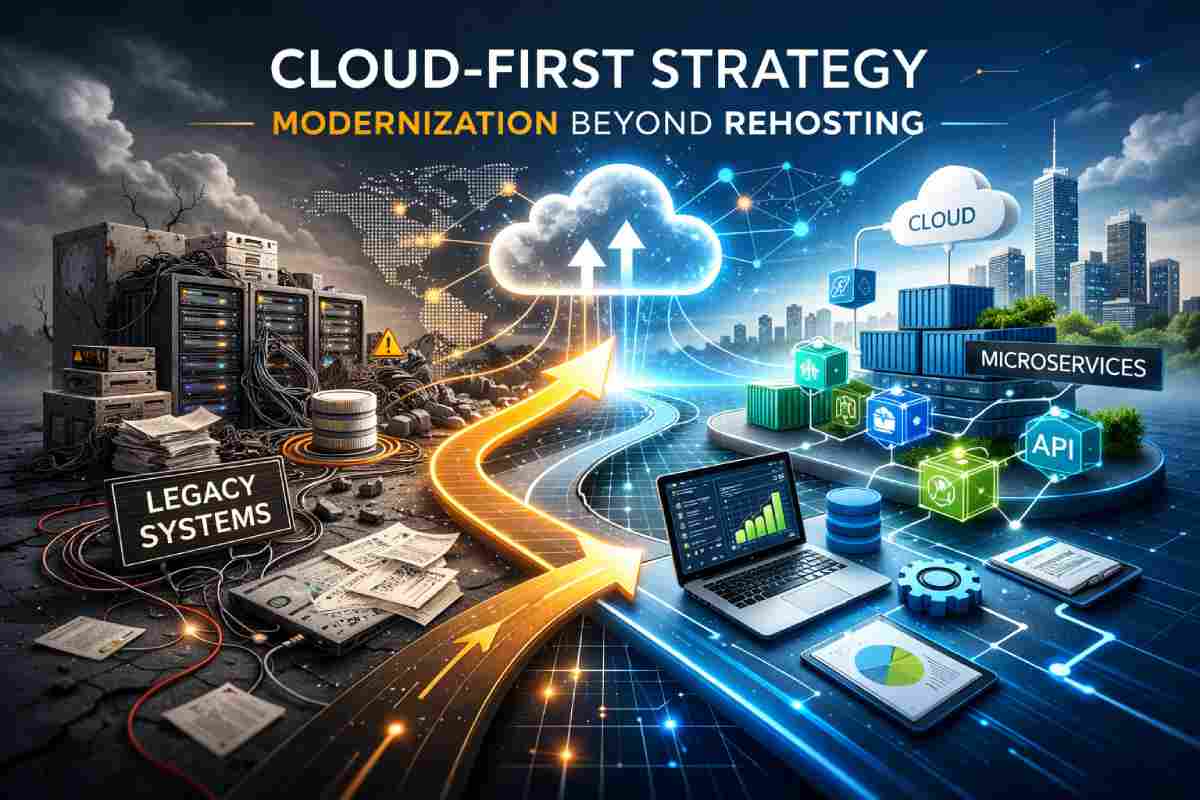
Cloud-First Strategy: When Modernization Requires More Than Just Rehosting
Lots of companies jump on a cloud-first strategy hoping it’ll speed up digital transformation and help them scale up faster. What they usually find, though, is that simply moving everything to the cloud — without fixing how things actually work — doesn’t solve old technical problems or spark real innovation. All the old limitations stick around, just in a new place. Sustainable transformation begins with structured legacy systems migration and architectural redesign that removes systemic bottlenecks. If you ignore technical debt, you’re stuck with sluggish performance, higher costs, and not much agility. So, a smart cloud migration means more than shifting infrastructure; you’ve got to look at the whole picture. Decision makers need to know when a surface-level approach isn’t enough if they want to stay competitive for the long haul.
Why Lift-and-Shift Isn’t Enough
Lift-and-shift (or rehosting) is pretty much the fastest way to shove apps into the cloud. You don’t have to change much code, so you move quickly — but don’t mistake raw speed for real modernization.
Here’s the problem: rehosting keeps your old architecture intact. That means all those tightly connected parts, outdated libraries, and clunky ways of managing resources still haunt you. So you end up with:
- Scalability issues, because monolithic apps can’t scale up or down one part at a time
- Lingering technical debt slowing down new development
- Cloud costs creeping up thanks to inefficient, rigid allocation models
When you just rehost without refactoring, you basically bring all your old inefficiencies into the cloud — and pay more to operate them. Changing where your stuff lives doesn’t fix how it works. If your goals are to be more agile, resilient, and innovative, treat rehosting as a short-term step, not your final destination.
Executives need to remember: moving to the cloud changes your location, not your logic. It’s your architecture that decides how well things perform.
Overcoming Technical Debt with Application Modernization
Technical debt is a big roadblock for anyone hoping to really take advantage of the cloud. Years of patchwork upgrades, tangled code, and designs made for old priorities all build up, making things slower, riskier, and harder to evolve — especially when you want to jump into AI, automation, or API-driven systems.
That’s where modernization steps in.
Unlike just rehosting, modernization means rebuilding applications to fit the cloud’s strengths:
- Breaking apart big, monolithic apps into smaller pieces
- Using containers and orchestration for flexible management
- Designing apps to be API-first
- Setting up CI/CD pipelines for faster releases
Think of it like moving an old factory to a fancy new building but leaving the broken assembly lines untouched. The environment’s new, but the bottlenecks stay. Modernization redesigns the whole process — so you get parallel workflows, automation, and real scalability.
The payoff is big:
- Quicker release cycles thanks to decoupled services
- Better fault isolation and resilience
- Stronger security baked in from the start
- Flexibility to adopt new tech
If you make modernization part of your cloud-first strategy, you build systems that can actually grow and adapt — not just sit in a new spot.
Getting Cloud Costs Under Control: Why Modernization Matters
A lot of execs worry about rising costs after moving to the cloud. People expect lower bills, but sometimes expenses shoot up instead.
This usually happens because old apps were built for static setups, and they don’t play well in cloud environments meant to be elastic. Always-on servers, oversized storage, and unnecessary data transfers end up costing way more.
A smart modernization roadmap solves this. Don’t migrate everything at once — take a step back and:
- Figure out which workloads are most complex or vital
- Decide which apps need a full rebuild versus a simple move
- Put modernization efforts where they’ll make the biggest difference
- Use cost management frameworks like FinOps to keep spending in check
With modernization built into the plan, you minimize waste, link investments to real results, and turn the cloud into a true innovation platform — not just another expense.
A thoughtful cloud migration connects your technical upgrades to financial discipline — something every enterprise leader needs if they want to balance bold moves with keeping costs under control.
When Digital Transformation Stalls — Make Cloud-First Actually Matter for Your Business
Going cloud-first isn’t just about ticking off infrastructure tasks. You need to tie everything to real business results. Too often, companies get stuck measuring their progress by how much they’ve migrated, not how much they’ve improved.
Take the company that shoots for “100% workload migration by Q4.” Sure, they technically hit their goal. But nothing’s actually faster. Customers don’t notice a difference. Operations are just as shaky.
What works better? Set KPIs that matter:
- Cut deployment lead time
- Boost system uptime and recovery
- Push features out faster
- Respond to customers quicker
When you build your architecture around these kinds of goals, things start to click. A solid governance plan and phased implementation keep things on track and lower risk.
Cloud transformation only works when every change supports your business strategy. If not, it’s just another IT project — no real advantage.
Stuck on Migration Choices? Use a Clear Framework
Not every system needs the same treatment. You want to avoid wasting energy on overhauling things that don’t need it — or ignoring what does. That’s where the “7 Rs” come in: Retire, Retain, Rehost, Relocate, Repurchase, Replatform, Refactor. They’re a quick way for execs to size up options.
Here’s the gist:
- Rehost — good for simple, low-risk systems. Get it done quickly.
- Replatform — makes some improvements, doesn’t overhaul everything.
- Refactor — this is the big one, for crucial systems that need flexibility, scale, and ongoing innovation.
To choose, look at:
- How critical is the system?
- How complex is it, technically?
- Does it need to keep innovating long-term?
This helps you invest where it counts. Not every system needs a major revamp right away, but your core platforms probably do.
A smart cloud-first approach mixes rapid rehosting with deeper modernization. You get the speed, without burning out your resources.
Bottom Line: Cloud-First Means Architecting for the Future
If your cloud strategy stops at rehosting, you’re just moving things around — no real change. You get real value when you tackle architectural challenges head-on.
Roll out your migration plan carefully, update your apps, and you’ll cut technical debt, improve costs, and make innovation easier to scale. Legacy cleanup matters — cloud alone doesn’t fix broken processes.
With the right approach, your cloud journey shifts from just relocating workloads to delivering actual business improvements. For leaders, that’s the job: treat cloud transformation as growing your architecture — not just shifting your infrastructure.
