
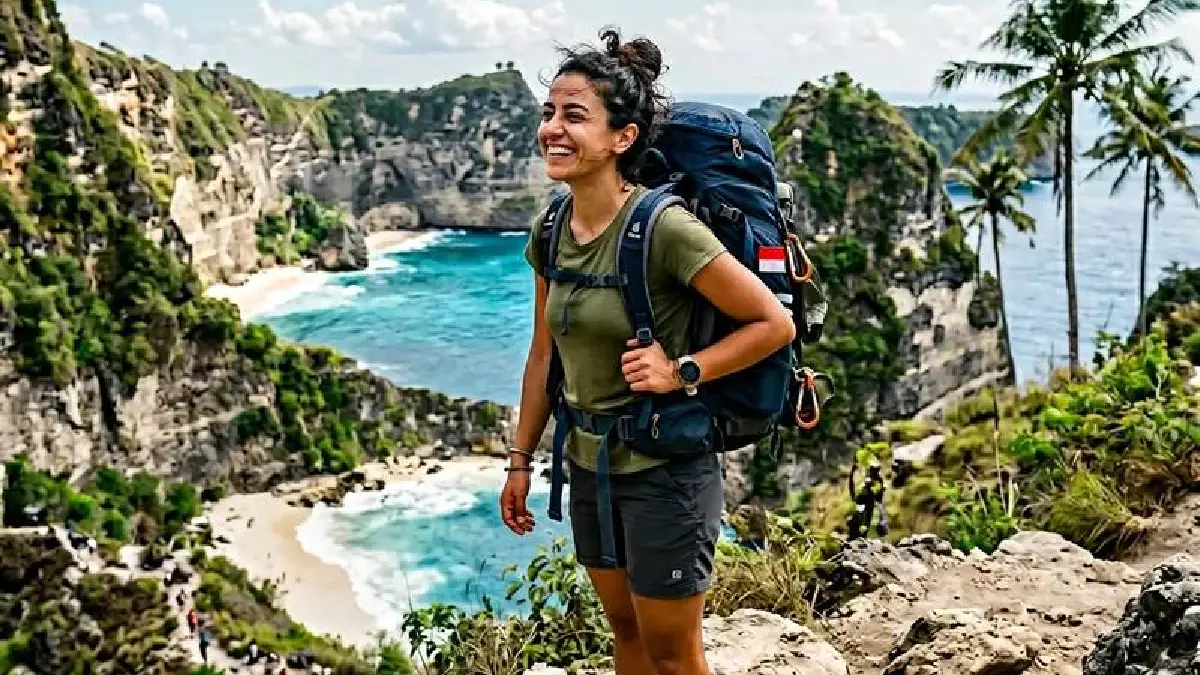
On the surface backpacking seems easy: place items in a backpack, designate a region and travel. However, to have a rewarding backpacking experience more planning is involved.
A worthwhile CWBiancaVoyage backpacking guide does not aim to discuss having high-tech gear or precise trip arrangements. It’s goal is to inform novice travellers on how to pack the appropriate items, how to budget their travel expenses, how to be prepared for unexpected problems during their travels, and how to travel safe yet enjoy the traveling freedom.
The most encouraging fact is that one need not be an experienced backpacker to start, one mainly needs an attainable goal, an appropriate weight packed in the backpack, and flexibility to account for things not working according to the trip.
Here we would like to illustrate the practical aspects of backpacking through a straightforward, easy-to-understand narrative.
Table of Contents
What Is Backpacking?
Backpacking is a way of traveling that involves carrying all your necessary belongings in a backpack as you move around different destinations rather than just sitting still.
Unlike a traditional holiday, backpacking often involves:
- Travelling with fewer possessions
- Using public transport
- Staying in hostels, guesthouses or budget accommodation
- Planning a flexible route
- Visiting several destinations
- Spending carefully
- Carrying your belongings yourself
- Making decisions as circumstances change
Backpacking can last a few days, several weeks or even months.
It is also important to understand that backpacking does not automatically mean travelling as cheaply as possible. A backpacker can choose budget accommodation and local transport while still spending more on experiences, better food or occasional comfortable accommodation.
The main idea is mobility and flexibility.
Why Can Backpacking Be Useful in Daily Life?
Backpacking can teach practical skills that are useful beyond travel.
For example, you may become better at:
- Budgeting
- Planning
- Making quick decisions
- Solving unexpected problems
- Managing limited resources
- Communicating with strangers
- Adapting to unfamiliar environments
- Deciding what you actually need
The biggest lesson is often simple: you can travel comfortably without carrying everything you own.
Why Generic Backpacking Advice Fails First-Time Travelers
A lot of backpacking advice sounds useful but is too general.
“Pack light.”
“Book cheap accommodation.”
“Travel like a local.”
“Take only the essentials.”
The problem is that essentials depend on the destination and the traveller.
A three-day city trip in warm weather has completely different requirements from a two-week mountain journey.
A better approach is to ask:
- Where am I going?
- How long will I stay?
- What will the weather be like?
- How often will I move?
- What activities will I do?
- What can I easily buy at the destination?
- What items would be difficult to replace?
This prevents you from following generic advice that does not match your actual trip.
The CDC similarly recommends adapting your travel health kit and packing decisions to your destination and planned activities rather than treating one packing list as suitable for everyone.
Building Your Pack: The Numbers That Actually Matter
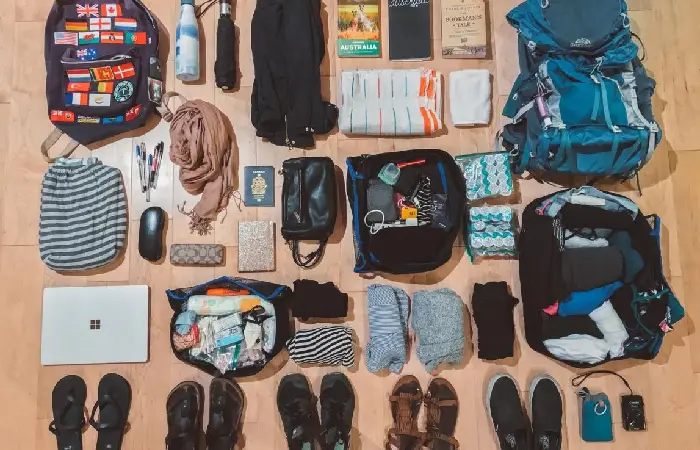
Instead of counting how many items are inside your backpack, pay attention to weight, volume and usefulness.
A useful way to evaluate every item is:
Do I need it, will I use it regularly and would it be difficult to replace?
If the answer to all three is no, it probably does not deserve space in your backpack.
Think in Categories
Your backpack normally needs five broad categories:
| Category | Examples |
| Clothing | T-shirts, trousers, underwear |
| Sleeping | Sleepwear, hostel sheet if required |
| Hygiene | Toothbrush, toothpaste, toiletries |
| Technology | Phone, charger, power bank |
| Safety | First-aid supplies, copies of documents |
You can then add destination-specific equipment.
How Much Your Backpack Should Weigh
There is no universal backpack weight that works for everyone.
A useful beginner target is to keep your fully loaded everyday travel backpack around 10–15% of your body weight when practical, while remembering that the right weight depends on your fitness, trip type and equipment.
For example:
| Traveller weight | 10% | 15% |
| 50 kg | 5 kg | 7.5 kg |
| 60 kg | 6 kg | 9 kg |
| 70 kg | 7 kg | 10.5 kg |
| 80 kg | 8 kg | 12 kg |
These are planning targets, not medical rules.
If your trip involves long hikes, stairs, frequent train changes or walking several kilometres each day, reducing unnecessary weight becomes particularly valuable.
The Best Test
Before leaving:
- Pack everything.
- Weigh the backpack.
- Walk with it for 30–60 minutes.
- Remove anything you did not actually need.
Repeat until the bag feels manageable.
The Packing List That Skips the Guesswork
A simple backpacking list might include:
Clothing
- 3–5 lightweight tops
- 2–3 pairs of trousers or shorts
- 4–6 pairs of underwear
- 4–6 pairs of socks
- Lightweight jacket
- Comfortable walking shoes
- Sleepwear
- Weather-specific clothing
Hygiene
- Toothbrush
- Toothpaste
- Deodorant
- Small soap or body wash
- Quick-dry towel
- Basic personal-care items
Technology
- Smartphone
- Charging cable
- Wall charger
- Power bank
- Plug adapter where necessary
Travel Documents
- Passport or identity document
- Visa where required
- Travel insurance information
- Booking details
- Emergency contacts
- Copies of important documents
Health and Safety
A basic travel health kit can include appropriate medicines, first-aid supplies, sunscreen, insect repellent and other destination-specific items. The CDC recommends preparing health supplies around the destination and activities rather than blindly carrying every possible item.
Budgeting: Real Numbers by Region
There is no single backpacking budget because accommodation, transportation, food and activities vary dramatically between destinations.
Instead of asking, “How much does backpacking cost?”, divide your budget into categories.
Daily Backpacking Budget Framework
| Expense | Budget approach |
| Accommodation | Hostel, guesthouse or budget room |
| Food | Local restaurants, markets and supermarkets |
| Transport | Buses, trains and shared transport |
| Activities | Choose your priorities |
| Insurance | Budget before departure |
| Emergency fund | Keep separate |
| Miscellaneous | SIM, laundry, fees and small purchases |
A useful starting calculation is:
Total trip budget = daily spending × number of days + transport + insurance + emergency reserve
For example, if your expected daily spending is $35 and you travel for 20 days:
$35 × 20 = $700
Then add major transport, insurance and an emergency reserve.
Do not spend your entire available money before departure. A separate emergency reserve gives you flexibility if a bus is cancelled, accommodation becomes unavailable or you need unexpected medical assistance.
Pre-Trip Planning: What to Actually Do Before You Leave
Planning does not mean creating a schedule for every minute.
Instead, concentrate on the things that can cause serious problems if ignored.
Before departure:
- Check entry requirements
- Check passport validity
- Confirm visa requirements
- Research local transport
- Check accommodation for the first night
- Check weather conditions
- Research local laws and customs
- Arrange appropriate travel insurance
- Save emergency contacts
- Download important maps or travel information
- Tell someone your basic itinerary
The U.S. Department of State’s international travel checklist similarly recommends checking destination information, organising documents, understanding local laws and considering travel insurance before international travel.
U.S. Department of State International Travel Checklist
Documents and Logistics
Your documents are more important than most pieces of equipment in your backpack.
Keep digital and physical copies where appropriate.
Important items may include:
- Passport
- Visa
- Travel insurance details
- Accommodation confirmations
- Transport tickets
- Emergency contact details
- Prescription information
- Driving licence if needed
- Copies of important documents
Do not keep every copy in exactly the same place.
For international travel, requirements vary by destination, so check the official government or immigration website for your destination before departure. For more related articles visit our website.
Health Preparation
Health preparation should happen before you leave rather than after you become sick.
Depending on your destination, consider:
- Routine vaccinations
- Destination-specific vaccines
- Prescription medicines
- Basic first-aid supplies
- Insect protection
- Sunscreen
- Hydration supplies
- Appropriate footwear
- Travel insurance
The CDC recommends consulting a healthcare professional or travel-health specialist before international travel when appropriate, particularly when destination-specific vaccines, medicines or health risks need to be considered.
CDC Travelers’ Health – Before You Travel
On the Road: Handling What Actually Goes Wrong
Even a well-planned trip will eventually experience a problem.
Your accommodation might cancel.
Your bus might be late.
Your phone might lose battery.
You might take the wrong train.
You might get sick.
The goal is not to prevent every problem. The goal is to have a backup plan.
Use the Three-Level Backup System
Plan A: Your original plan.
Plan B: A realistic alternative.
Plan C: The safest option if everything goes wrong.
For example:
Plan A: Take the evening bus.
Plan B: Take the morning bus.
Plan C: Stay another night and travel the following day.
This simple approach prevents small travel problems from becoming major emergencies.
Solo Travel and Safety Specifics
Solo backpacking can be rewarding, but it requires more personal responsibility.
Before travelling alone:
- Share your basic itinerary with someone you trust
- Keep emergency contacts accessible
- Research areas you plan to visit
- Avoid displaying expensive valuables
- Be careful when accepting help from strangers
- Keep important documents secure
- Have enough money for an unexpected night
- Avoid risky activities without appropriate preparation
- Know how to contact local emergency services
For outdoor or mountain trips, additional preparation may be necessary. The U.S. Department of State advises travellers to check local conditions, prepare for limited connectivity, carry appropriate equipment and consider medical/evacuation insurance for higher-risk activities.
Mountain Safety – U.S. Department of State
Important: Safety advice should always be adapted to the country and activity. Hiking alone in a busy national park is different from hiking alone in a remote mountain area.
Common Mistakes First-Time Backpackers Make
1. Packing Too Much
The most common mistake is treating every possible situation as a reason to pack another item.
Pack for likely situations, not imaginary ones.
2. Planning Every Day
A completely fixed itinerary leaves no room for unexpected opportunities.
3. Ignoring Transport Time
A destination may look close on a map but require hours of buses or trains.
4. Spending Without Tracking
Small daily expenses can become surprisingly large over several weeks.
5. Choosing Gear Based Only on Price
The cheapest item is not always the best value.
6. Forgetting Recovery Time
Travelling every day can become exhausting.
7. Having No Emergency Money
Always maintain some financial backup.
8. Treating Safety as an Afterthought
Research local conditions before you arrive rather than learning about risks after something goes wrong.
Building the Mindset That Makes Backpacking Work
The most useful backpacking skill is not knowing how to use every piece of gear.
It is adaptability.
Your original plan may change because of:
- Weather
- Transport delays
- Budget changes
- Accommodation problems
- Personal fatigue
- Local events
- New opportunities
A flexible traveller does not automatically consider a changed plan a failed trip.
Instead, ask:
What is the safest and most practical option now?
That mindset can make backpacking much easier.
You also do not have to travel exactly like another backpacker. Some people love hostels and night buses. Others prefer private rooms and slower journeys.
The best backpacking style is the one that fits your budget, comfort level and destination.
Gear Comparison: What’s Actually Worth the Investment
You do not need the most expensive backpacking equipment.
Spend more on items that affect comfort, reliability or safety.
| Gear | Worth investing? | Why |
| Backpack | Yes | Comfort and durability matter |
| Walking shoes | Yes | Poor footwear can ruin a trip |
| Rain jacket | Usually | Useful protection in changing weather |
| Packing cubes | Optional | Organisation rather than necessity |
| Expensive camera | Not essential | Smartphone may be enough |
| Premium water bottle | Usually not | Basic reliable bottle can work |
| Power bank | Often yes | Useful during long travel days |
| Travel adapter | Yes for international trips | Prevents charging problems |
| First-aid kit | Yes | Small but useful backup |
| Luxury travel gadgets | Usually no | Adds weight and cost |
The general rule is:
Spend money on reliability, comfort and safety—not on gadgets that simply look useful.
A Simple Backpacking System for Beginners
If you are planning your first trip, use this five-step system.
Step 1: Choose the Trip
Decide:
- Destination
- Duration
- Season
- Main activities
- Approximate budget
Step 2: Build the Route
Choose a manageable number of destinations.
Moving every day is not always better.
Step 3: Build the Backpack
Start with essentials.
Then add destination-specific equipment.
Step 4: Prepare for Problems
Create backup plans for:
- Money
- Transport
- Accommodation
- Communication
- Health
- Important documents
Step 5: Leave Some Space
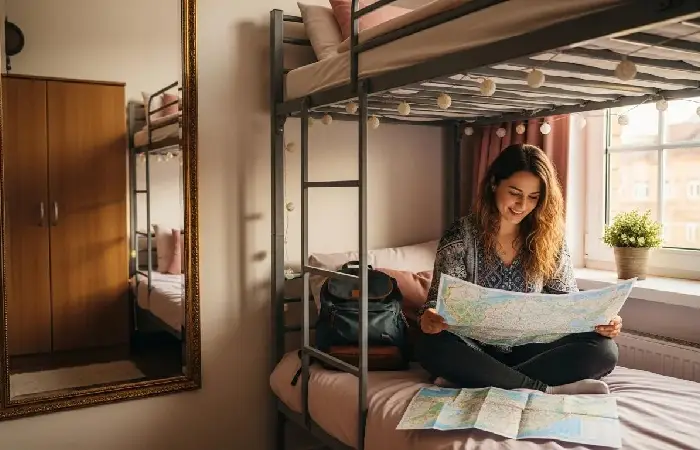
Do not fill your backpack to maximum capacity before leaving.
You may buy food, souvenirs or replacement items during your trip.
Is Backpacking Actually Better Than Traditional Travel?
Not necessarily. It depends on what you want from a trip.
Backpacking may be better if you want:
- More flexibility
- Longer travel
- Multiple destinations
- Lower-cost accommodation
- More independence
- A stronger sense of adventure
Traditional travel may be better if you prefer:
- Predictable schedules
- Comfortable accommodation
- Organised tours
- Less logistical responsibility
- Fewer changes during the trip
Neither approach is automatically better.
Good travel is travel that matches your needs.
Frequently Asked Questions
What is the best backpacking advice for beginners?
Start with a manageable trip, pack less than you think you need, research the destination and keep an emergency budget. Your first trip should teach you what works for you rather than trying to be perfect.
How heavy should a backpack be?
There is no universal limit. A practical beginner target is often around 10–15% of body weight when possible, but trip type, fitness, terrain and equipment all matter.
What should I pack for backpacking?
Start with clothing, toiletries, documents, basic health supplies, technology and destination-specific equipment. Avoid packing items simply because you might possibly use them.
Is backpacking expensive?
It can be affordable, but the cost depends heavily on the destination, accommodation, transport, food and activities. Create a daily budget and add transport, insurance and emergency funds separately.
Is backpacking safe for first-time travellers?
It can be, provided you research the destination, understand local risks, secure important documents, maintain communication and avoid unnecessarily risky situations.
Do I need expensive backpacking gear?
No. Prioritise reliable equipment that improves comfort, safety or durability. Expensive gadgets are rarely essential.
Final Thoughts
The best backpacking advice CWBiancaVoyage is not about creating a perfect checklist or buying expensive travel equipment.
It is about learning how to pack intelligently, budget realistically, prepare for problems and remain flexible.
Start small if you are new to backpacking. A shorter trip can teach you how much you really need, how much you spend each day and which equipment is actually useful.
Over time, your packing list will become shorter, your planning will become easier and your confidence will grow.
The goal is not to travel with the perfect backpack.
The goal is to carry only what helps you enjoy the journey.
