
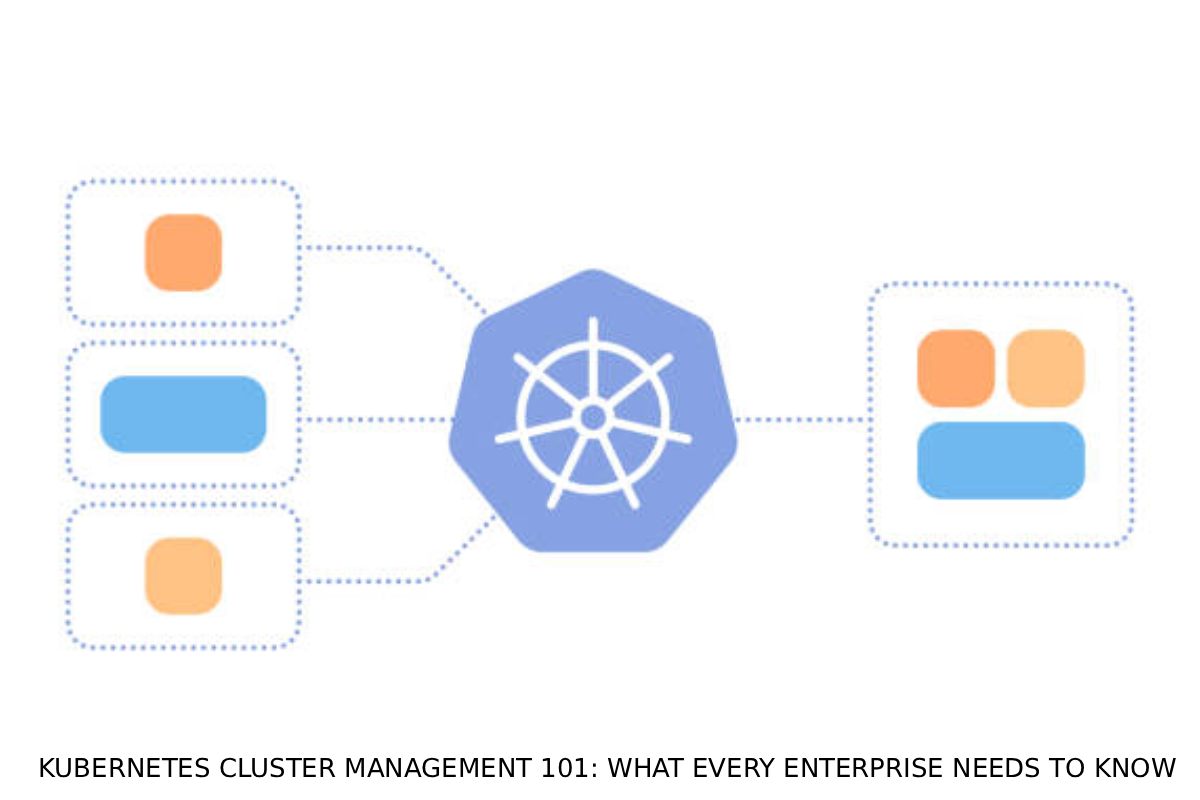
Kubernetes has emerged as the new cloud-native infrastructure. It provides scalability, flexibility, and a mechanism for running applications uniformly across environments. However, establishing a cluster is one thing, but it is entirely another thing to manage Kubernetes on a large scale. If your company is heading this way, then these are the basics you should know about Kubernetes cluster management.
Table of Contents
It is not all about running pods
The first concepts people learn about Kubernetes are typical workloads:
- Pods
- Deployments
- Services.
However, workloads are not the only concern with cluster management. It also entails sustaining the:
- Underlying infrastructure
- Security
- Maintaining costs
- Making systems visible.
Consider it like this: the passengers are the workloads, and the airplane is the cluster. It is important to manage the passengers. However, keeping the plane safe, stable, and efficient is critical for a successful mission.
Observability is not an option
Kubernetes has abstractions that have the potential to obscure the view of problems. Depending on observability, you might not realize that there is something wrong until it affects users. Your savior is:
- Metrics
- Logs
- Traces.
You can use Kubernetes cluster management tools to monitor what is going on. In addition, do not just save data. Create dashboards, alerts, and playbooks so your team is familiar with what to do in the event of a failure. A cluster that cannot be observed is akin to driving at night without headlights.
Day-2 operations are where it’s at
Starting a Kubernetes cluster can be seen as a milestone. However, it is not the end. Day-2 operations are what will make or break your platform. They include:
- Upgrades
- Scaling
- Monitoring
- Incident response.
Most companies fail to take this phase seriously and fail once clusters start expanding. Ensure you have:
- Explicit patching
- Version upgrading
- Backup plans.
Wherever possible, automate them to save yourself the firefighting later. Unless your team implements Day-2 early on, you will probably hurt sooner than you thought.
Controlling costs demands discipline
Kubernetes can spin up resources easily, too easily. In the absence of governance, you can find yourself with:
- Underutilized clusters
- Uncontrollable cloud charges.
Periodically review resource requests and limits. Then employ aids that may assist you in scaling down workloads. Your cluster management approach should consider cost efficiency as a component. Not something you revisit when finance raises an eyebrow.
Security has to be part of it
Kubernetes is flexible. However, that comes with a security concern. The default settings are usually too open to meet the needs of an enterprise. Must-haves include:
- Role-based access control (RBAC)
- Network policies
- Secrets management.
Another thing you should consider is the security of both the container images that you have and the supply chain that supplies them. Your cluster should be considered as a portion of your security perimeter rather than an addition.
Final words
Kubernetes cluster management entails creating a platform that is stable, secure, and scalable. It should enable your teams to work more efficiently. Successful companies are those that invest in operational excellence from the very beginning.
