
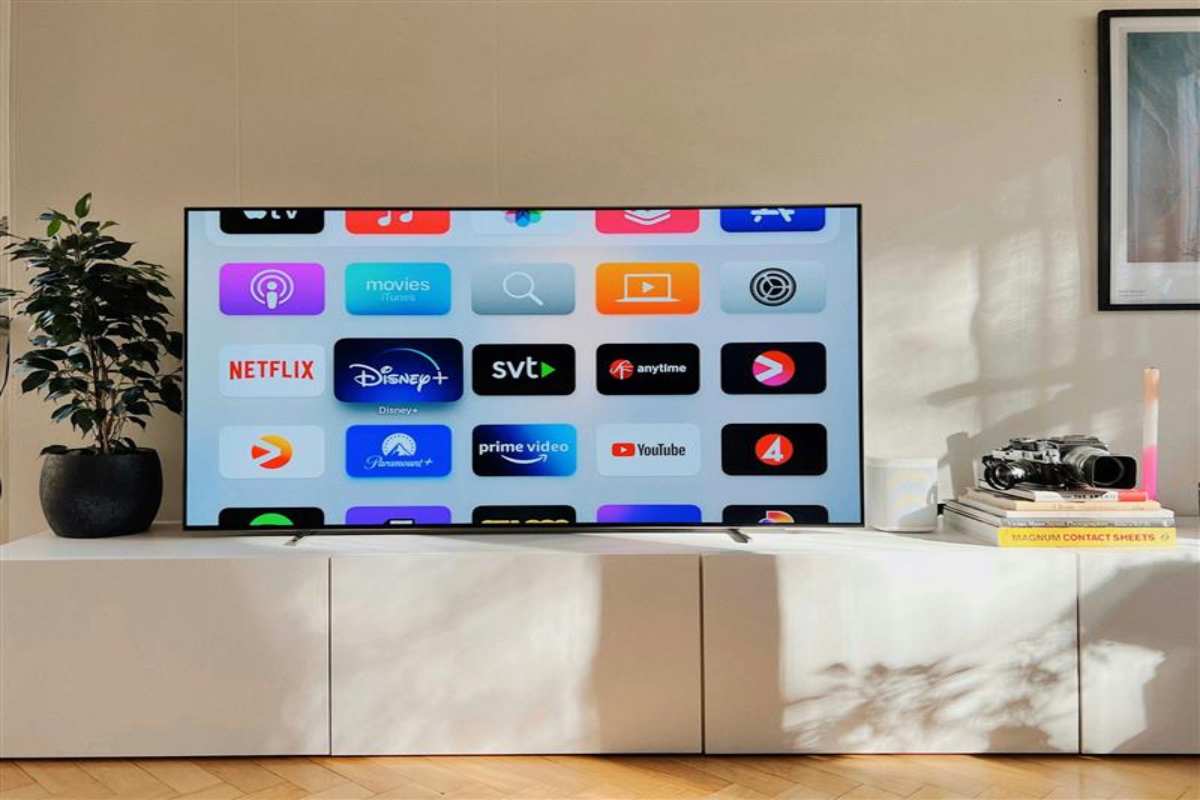
Local broadcast television continues to carry the events that anchor American viewing, from the NFL, NBA, and NHL to the PGA Tour and major racing such as the NASCAR Cup Series, along with the FIFA World Cup, the Olympic Games, primetime network programming, major live national events, trusted local journalism, and emergency alerts.
For decades, local broadcast television has remained technologically consistent. Signals are transmitted over the air, received by antennas, and processed by tuners. What has changed is the environment in which viewers expect to access that signal.
Through its patent-pending infrastructure, LocalPlay TV enables subscribers to access over-the-air broadcast television on iOS and Android phones and tablets; LG, Samsung, Sony, Hisense, and TCL smart TVs; and devices such as Apple TV, Roku, and Amazon Fire TV. By working with widely used platforms, the company seeks to simplify and reduce the cost of local television access.
The subscriber operates their own television receiver in the same way they would in their own home. Just as in a private residence, a passive antenna receives broadcast signals, and the subscriber’s own tuner converts those signals into viewable television. The equipment functions the same way it would in a subscriber’s home. The difference is location, not operation.
This subject and verb clarity defines the company’s architecture. The subscriber is the actor. The subscriber’s device performs reception. LocalPlay TV provides access to facilities.
The distinction is not semantic. Courts have historically focused on who performs the transmission of copyrighted works. In cable systems, the operator transmits programming to subscribers. In LocalPlay TV’s model, no service-based performance exists. Broadcast signals continue independently of the infrastructure, and copyrighted works reside only within subscriber-operated equipment.
From a systems perspective, the company has engineered a one-to-one architecture. There is no group addressing, no shared stream, and no centralized video storage. Each access session reflects individual device operation.
The market opportunity is significant. Broadcasters receive exclusive spectrum licenses from the FCC in exchange for serving the public interest. That public-interest obligation includes universal availability. Yet modern device usage patterns have complicated physical antenna installation for many households.
LocalPlay TV addresses those logistical challenges without entering the content business. It builds facilities that simplify reception while preserving private control.
For technology observers, the company represents a compliance-driven approach to innovation. It does not disrupt broadcasting. It reinforces it through careful architectural design.
As national rollout continues, LocalPlay TV is positioning itself as a foundational layer in the evolving television ecosystem. The model is built on technical precision, conservative legal framing, and scalable infrastructure design, enabling viewers to access local broadcast television seamlessly across smart TVs, tablets, and phones.
