
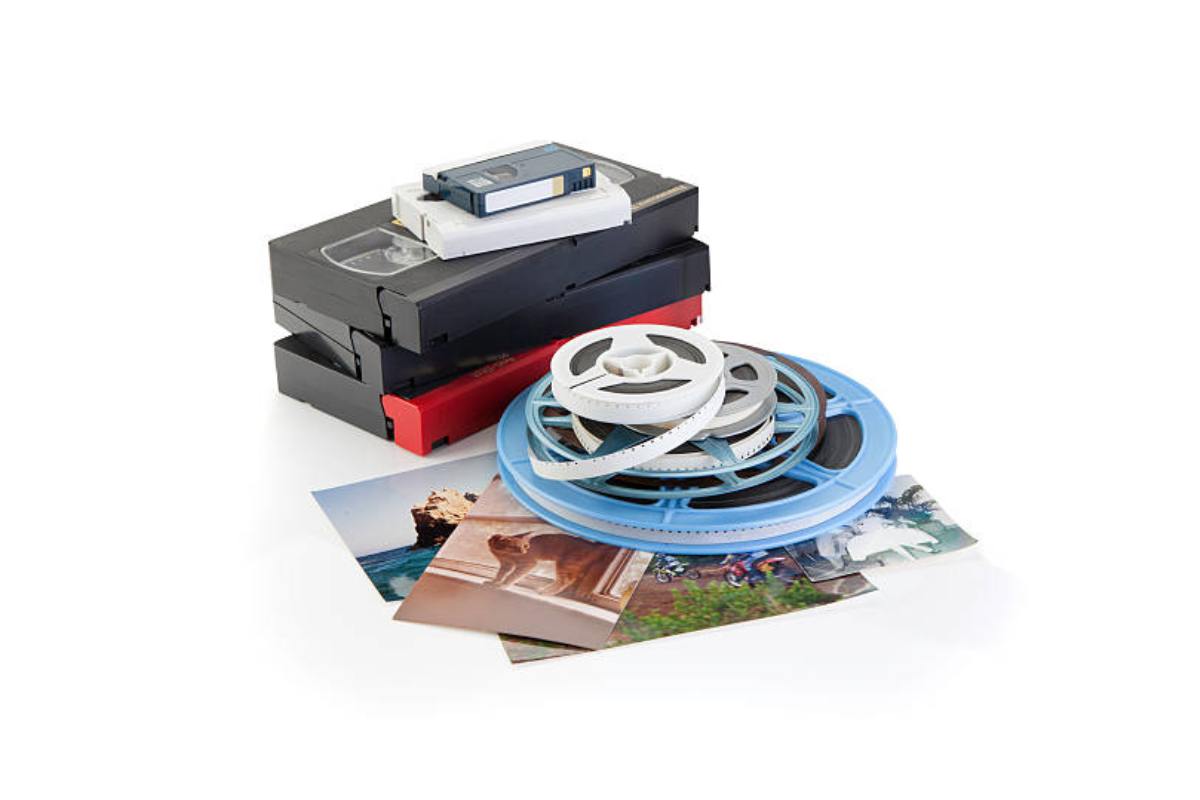
The question of which formats can be digitized for archival purposes is not simply a technical checklist. For organizations managing legacy media collections — broadcasters, studios, museums, universities, and corporations — it is a strategic data management problem. Physical media degrades on a fixed timeline. Digitization converts those time-sensitive assets into stable, accessible, and distributable files. The challenge is understanding which source formats exist in a collection, what equipment and expertise each requires, and what digital output specifications will serve long-term preservation and access needs.
This guide covers the main categories of film and video formats eligible for digitization, what the process involves for each, and what output standards archival-grade digitization should meet.
Table of Contents
Why Digitization Is a Data Problem, Not Just a Media Problem
Before cataloguing formats, it helps to reframe what digitization actually does. Converting a film reel or videotape to a digital file does not eliminate the preservation challenge — it transforms it. A physical tape that degrades silently in a vault is replaced by a digital file that requires active infrastructure: storage media with finite lifespans, consistent file format management, redundant backup systems, and periodic migration as formats and hardware evolve.
According to archival research from the Image Permanence Institute, magnetic tape media — including many of the video formats discussed below — has a shelf life of approximately 10 to 30 years under optimal storage conditions. In poor conditions, that window narrows considerably. For organizations sitting on collections recorded in the 1970s, 1980s, and 1990s, the digitization window is not indefinitely open. Many formats are already in active deterioration, and the playback equipment needed to read them is becoming increasingly scarce.
Digitization, done correctly, moves these assets into a format layer that can be managed, copied, and migrated systematically — the same way software infrastructure teams manage data pipelines and storage systems.
Film Formats Eligible for Digitization
35mm Film
The professional standard for cinema throughout the 20th century. 35mm originals — including camera negatives, internegatives, and release prints — can be scanned at resolutions ranging from 2K to 4K and beyond using high-resolution film scanners. The output is typically a DPX (Digital Picture Exchange) or TIFF file sequence, preserving the full tonal range and grain structure of the original photochemical image. 35mm is the most well-supported format for archival scanning services.
16mm Film
Widely used in documentary filmmaking, television production, educational content, and amateur cinema. 16mm carries less resolution than 35mm but remains highly scannable and is a common format in institutional and museum collections. Many documentary films from the 1960s through 1990s exist only on 16mm.
8mm and Super 8
Consumer and semi-professional formats used extensively for home movies and independent production. Super 8 introduced a slightly larger frame area and improved image quality over standard 8mm. Both can be scanned for digitization, though at lower output resolutions than larger gauges. These formats are often found in private, family, and small institutional collections.
70mm Film
Used in large-format cinema productions for its significantly higher resolution potential. 70mm scanning requires specialized equipment but produces files capable of capturing the full scope of the format, making it relevant for major studio archival and restoration projects.
Videotape Formats Eligible for Digitization
The videotape category is where the format landscape becomes most complex, and where the urgency is most acute. Magnetic tape is subject to binder hydrolysis — a process in which the adhesive holding magnetic particles to the tape base breaks down, causing the tape to shed material and become unplayable. Tapes affected by this condition can often be temporarily restored using a controlled baking process, but this window for recovery is limited.
Broadcast and Professional Formats
- 1-inch Type C: A reel-to-reel analog format used extensively in broadcast television production from the late 1970s through the 1990s. Significant amounts of news footage, programming, and broadcast masters exist on this format.
- Betacam, BetaSP, and DigiBeta: Sony’s Betacam family became the dominant professional video format for broadcast production through the 1980s and 1990s. BetaSP improved on the original Betacam, and Digital Betacam (DigiBeta) introduced a digital signal path while maintaining the same cassette form factor. All three are common in broadcast archives.
- D1, D2, D3, D5: Component and composite digital videotape formats used in high-end broadcast and post-production environments during the transition from analog to digital production in the late 1980s and 1990s.
- HDCAM and HDCAM SR: Sony’s high-definition tape formats, widely used in professional HD production from the early 2000s through the mid-2010s. HDCAM SR supports higher bit rates and is used for feature film and high-end broadcast production.
- DVCAM and DVCPRO: Professional variants of the DV format used in news gathering, documentary, and corporate production. DVCAM was Sony’s professional DV format; DVCPRO was Panasonic’s equivalent.
Consumer and Prosumer Formats
- VHS and S-VHS: The most widely distributed consumer video format in history. VHS tapes represent the largest volume of consumer video recordings from the 1970s through the early 2000s. S-VHS offered improved luminance resolution over standard VHS.
- VHS-C: A compact cassette variant of VHS used in camcorders.
- MiniDV: A digital consumer and prosumer format that became standard for independent filmmaking, journalism, and home video in the late 1990s and 2000s. MiniDV tapes use DV compression and are common in independent film and documentary collections.
- Hi8 and Digital8: Hi8 was an improved analog consumer format from Sony. Digital8 used Hi8 cassettes but recorded a digital DV signal, bridging consumer analog and digital formats.
- Betamax: Sony’s consumer format, which lost the format war against VHS but remained in use in some markets through the 1980s and 1990s.
- Laserdisc: An optical disc format used for home video distribution from the late 1970s through the 1990s, particularly in Japan and among videophile audiences in North America. Laserdisc can carry significant archival value as a distribution format for films not available in other surviving formats.
- ¾-inch U-Matic: An early professional and educational videocassette format introduced by Sony in the early 1970s. U-Matic was widely used in broadcast news, corporate video, and educational institutions. Many collections from the 1970s and early 1980s exist only on this format.
What Archival-Grade Digitization Output Should Look Like
Not all digitization is equal from an archival standpoint. The output specification matters as much as the source format handling.
For film, archival-grade scanning typically produces uncompressed or losslessly compressed image sequences (DPX or TIFF), with color metadata captured and documented. A preservation master and an access copy are generally created from the same scan — the preservation master is maintained in its full-resolution, uncompressed form, and the access copy is encoded for practical distribution and viewing.
For video, archival-grade digitization captures the full signal at the highest practical quality, typically producing files in formats such as MXF or MOV with lossless or near-lossless codecs (such as FFV1 or JPEG 2000 for preservation masters). Signal capture quality, color space, and audio fidelity are documented alongside the file.
Organizations managing collections at scale — studios, broadcasters, archives, museums — typically require a combination of digitization services and managed storage infrastructure. Companies specializing in film and video digitization and archival storage handle both the format-specific playback and capture requirements and the physical and digital storage environment needed to maintain those assets after digitization is complete.
Practical Considerations for Organizations Planning Digitization
Inventory first. Before any digitization project begins, a physical inspection and catalogue of existing formats is essential. Collections frequently contain mixed formats, mislabeled tapes, and materials in varying states of degradation. Identifying what exists and in what condition determines both the scope of the project and the urgency of individual items.
Prioritize by risk. Formats with active degradation — particularly acetate-based film showing vinegar syndrome signs, or magnetic tapes with sticky-shed symptoms — should be prioritized regardless of their commercial or cultural value. Materials that cannot be played cannot be digitized.
Do not digitize without a storage plan. The output of a digitization project — high-resolution digital files — can represent significant data volumes. A 4K DPX sequence from a feature-length 35mm film can easily exceed several terabytes. Organizations need a defined storage architecture, with redundancy and migration schedules in place, before digitization begins.
Pair digitization with metadata capture. Digital files without accurate metadata — format origin, scan parameters, date, content identification — lose much of their utility over time. Archival digitization should include structured metadata that follows standards such as the PBCore schema for audiovisual collections.
Conclusion
The range of film and video formats eligible for digitization is wide, and the technical requirements vary significantly across categories. What is consistent across all of them is the time sensitivity involved. Magnetic tape and acetate film both degrade on timelines that are already active for collections recorded in the latter half of the 20th century.
For organizations managing these collections, digitization is not a discretionary upgrade — it is a data migration project with a closing window. The formats can be captured. The infrastructure to store and manage them exists. The critical variable is whether the decision to act is made before the physical source material passes the point of recovery.
