
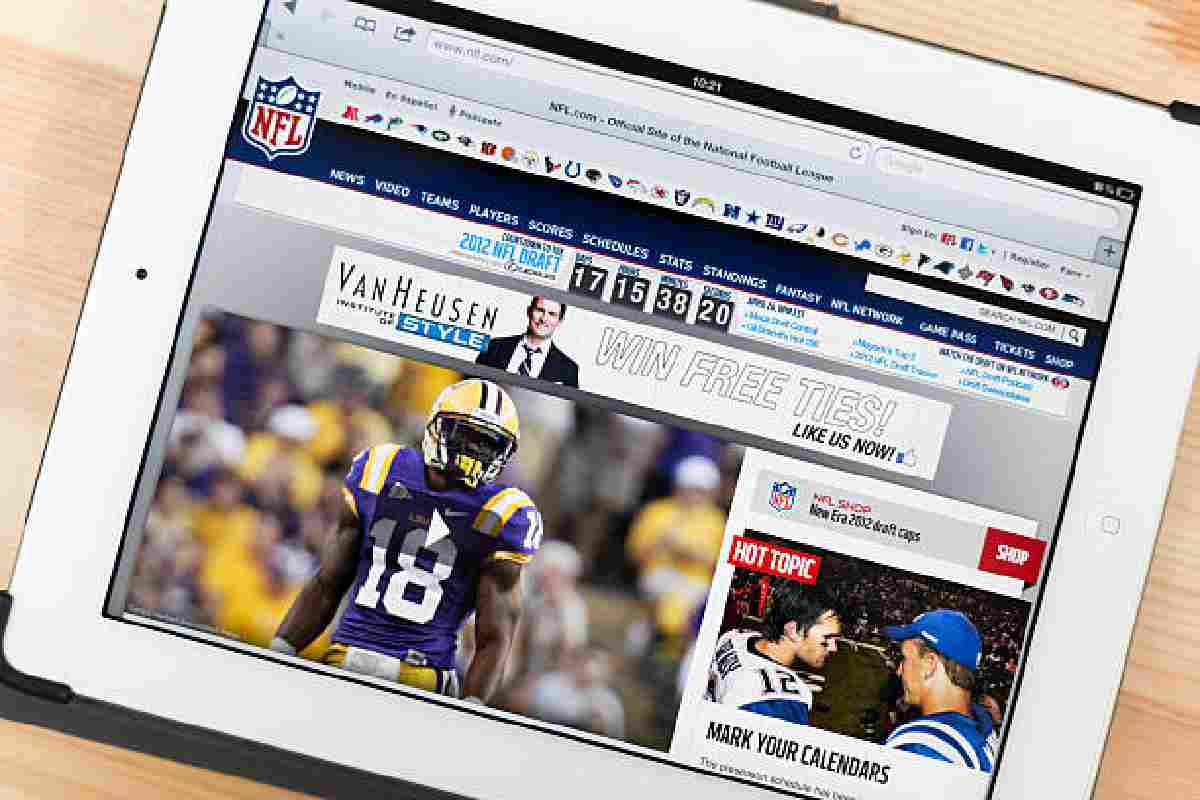
The NFL is one of the biggest sporting leagues in the world and makes immense use of technology to improve the league for players, coaches, the league itself and the fans. Using technology speeds up the pace of games, makes them fairer, protects players’ safety and, whether they’re at the live game itself or just following it on TV, enhances the fans’ experience. Below is a look at the different technology the NFL uses in games, its role and whether it’s a better replacement.
Table of Contents
Television
Television has impacted the NFL more than any other technology. Better broadcasting technology allows the league to show instant replays. Teams use game footage to coach players, and the league uses it to evaluate officials. Clubs have also harnessed the power of television to upgrade stadiums, which include installing large video screens so that the live experience can compete with watching the game at home.
Optical tracking system
Optical tracking systems have contributed to a better viewing experience and sped up games. Before, stadium employees known as a “chain gang” had to measure where the ball was spotted. Not now. Several different cameras around the gridiron allow the system to determine precisely where the ball is spotted. At the start of a drive, the technology can note the ball’s location, and when a play is run and the ball is hand-spotted, the system notifies officials immediately if a first down was gained. This saves time because it spares the need for chain gangs to measure the distance manually.
Artificial intelligence
Artificial intelligence (AI) has had a significant impact on the game. To reduce concussions and other head injuries, not only has the league developed position-specific helmets and banned the use of helmets that perform poorly during testing, but it also uses an AI-powered visual system to track the number of head impacts per player during the game. Although the tech can’t measure the magnitude of an impact, it does provide detailed information about the number of head impacts each player sustains during a match.
Data analytics
The Next Gen program uses RFID devices in players’ gear and the ball to capture detailed stats on players’ movement, speeds and distances. Machine learning algorithms process and analyze the data and produce insights that coaches and players use to improve strategies and performance. They can even analyze distance, speed, location, down, direction, environmental factors such as temperature and more to help predict other players’ trajectories and form strategies.
This type of wearable technology isn’t merely used to enhance players’ performance. Teams are also using it to monitor players’ exertion levels, rest players for game day and prevent them from suffering injuries. Whereas weight training is easier to quantify, overall exertion isn’t. The wearable tech allows coaches to monitor players’ workload and understand when it’s getting too much for the player and when they’re close to injury.
The implementation of data analytics is not only improving team performance and strategies, but it’s also enhancing fans’ experience. The data is helping fans to understand the game’s intricacies, important when studying point spreads and deciding how to bet. As well as deepening their understanding of football, the analytics are encouraging them to engage with the sport more. There’s also the bonus that, by detecting potential injury before it occurs, the technology is keeping players healthy, so fans can watch their favorite players more often, than seeing them sitting on a bench on the sidelines.
Microsoft tablets on the sidelines
The introduction of Microsoft Surface tablets and the sideline viewing system has boosted game strategy and analysis. Before, coaches received faxes of black-and-white images; now, they receive high-resolution images in color on secure tablets immediately and can zoom in on plays, annotate them and review them, all in real time.
The tablets are engineered to withstand difficult conditions on the field and provide coaches with essential data at their fingertips. They can encounter heat, cold, rain and glare and still perform at their best during games. The tablets even feature a stylus attached so coaches can use them when wearing gloves.
The tablets have transformed traditional coaching into a more efficient, modernized process and helped the NFL to maintain a balance between the integration of new technology and preservation of competitive spirit and integrity in football. All tablets are identically configured, have zero internet access and no one can download apps that give them a competitive advantage. The NFL also locks them up before and after games.
The NFL has used technology effectively to enhance the performance of players and protect them from injury. Technology has kept games fair and let them flow more smoothly and has improved the fans’ experience, who can enjoy features and visuals that help them to follow the game and data that enables them to engage with the NFL football more.
